
UPLIFT!–5
How I Helped Myself

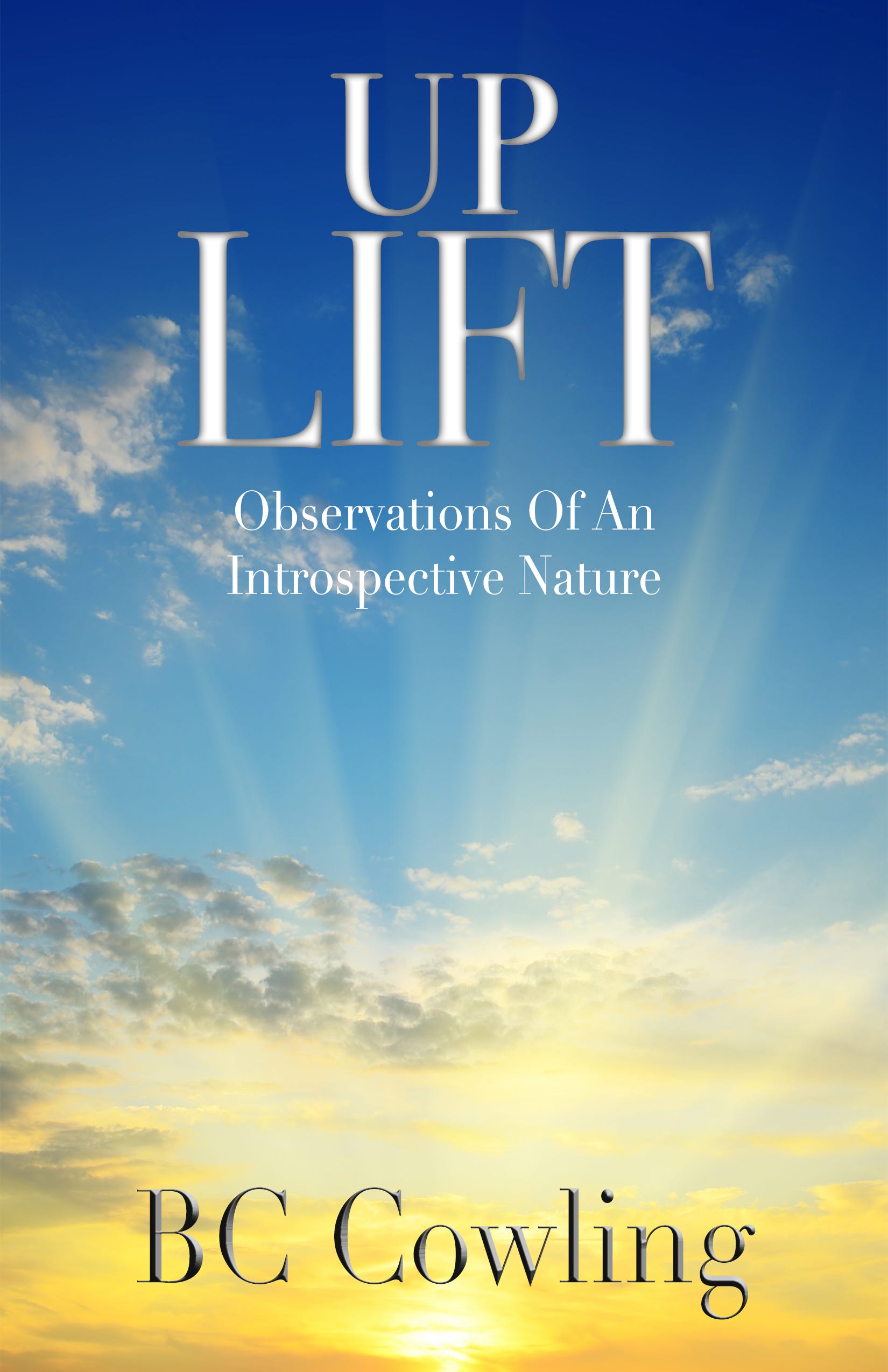
An everyman's update of Scott Peck's "The Road Less Traveled." Peck's book, published in 1978, is widely considered a masterpiece and explores how we confront and explore problems.
Chapter Twelve
SMALL STEPS SCALE MOUNTAINS
Big Steps Can Bring Downfalls
For three years from 1980 to 1983, physicians prescribed antibiotics for my viral throat infections with no effect. Not willing to admit I needed to make major changes in my lifestyle before I could feel better, and, growing more desperate, I began reshaping my diet.
I read several books from health food stores. I noticed that when I was feeling flu-like, which was happening more often, I did not feel bad while eating. After I finished a snack or meal, I felt worse again. What I ate also affected my feelings, but the changes were unpredictable.
One of the first authors I read was a professor who wrote about fifty-day water fasts, soup being too watery to be nutritionally beneficial, eating as many raw foods as possible, and the benefits of enemas. Everything he wrote was radical to me.
This professor was so enthusiastic, and his books so full of successful case histories that I wanted to have the great health he wrote about. But how could I fast? I felt better when I ate. I tried some of his recipes, which were different from my normal diet, but not too different. My health improved a little. I took small steps with my diet but felt unsatisfied with my efforts to feel better.
When I moved to San Francisco from St. Louis in November 1982, I drained my savings. I felt the pressure to find work, but reestablishing my handyman business in a new city required patience. Repairing homes gave me the freedom I craved. In May, I found some work. Before the first job was done, I had a second, then a third job. By sticking to my new diet, I felt strong enough to work.
In June, I returned to St. Louis for my bankruptcy hearing to protect my building while trying to sell it. The ongoing viral infections had wrecked my cash flow. My cousin John, an attorney, was kind enough to represent me at no charge, but I was required to appear at the hearing.
My emotions swung wildly, and I was unable to maintain my diet while traveling. A week later, I returned to San Francisco to find the work I thought was waiting for me had been completed by someone else.
Weaker and more desperate, I plunged back into my search for health and work. I read books on other approaches to eating, many of which conflicted with each other. I passed out my Handyman Service flyers and called property management companies. The work momentum I had created was difficult to reestablish, but I did find some small jobs.
I also jumped into a raw foods diet, frantic to regain my good health. Within ten days, my energy soared. Throughout July, life held new promise. I was almost current with my rent, and my roommate was not pressuring me.
During this time, against my inner nudges, I let myself be pulled into a spiritual group. On August 1st, I realized the group was not for me, and I abruptly left it.
My recurring flu-like symptoms returned. I panicked. My financial life could have withstood a dip in health, but my emotions could not. Overreacting, I went to a restaurant in the Fillmore District and ate a hamburger, fries, and drank two beers.
Burgers and beers do not usually make people sick. After weeks of raw foods and a then-undiagnosed liver condition from past alcohol excesses, the meal was catastrophic for me. I became very ill.
Weeks later, struggling to work and falling behind in my rent, I let myself get severely chilled in San Francisco's ever-changing weather. I became sicker.
Five years passed before I earned another dollar. Years later, I have yet to fully recover my health. What happened? I tried to take too many big steps. I tried to change too much at once in my life. Extremes have always attracted me, and excitement is addictive. Gradually I began to understand myself better. I realized that small, often unexciting steps are a better path.
A commodities trader once told me he was successful because of his training as a pilot. The preflight checklist could never be rushed. He transferred this discipline to his trading to avoid getting emotionally involved, looking for a financial home run. He was content and profitable hitting singles. Small steps.
Chapter Thirteen
VISUALIZE
We All Do It
When you describe a house, a car, a person—anything—you visualize what or whom you are describing. Visualizing is a powerful tool that can be even more useful with some self-training. By visualizing, we can bring a new job or relationship into our lives, a change in our health, material possessions—the possibilities are endless.
If you are curious or adventurous, sit quietly for a few minutes each day or evening. Whenever possible, choose the same time and place each day. Close your eyes and imagine one way your life could be better. Contemplate on what you are imagining. Do this daily for a month, then change your image to a different way you hope to improve your life.
Visualizing can be as simple as focusing on what you want or as complicated as creating a host of unseen disruptions in your life. As with most tools, there are hazards.
A former roommate of mine belonged to a religious sect that practiced a particular chant. She was excited about her chanting because she said it brought the things she asked for into her life. We occasionally talked about her experiences, and she was open about using this religious practice to get material goods. This woman was visualizing.
My chanting friend was unaware of the effects of her actions. If I want more money and rob a bank, I will have more money and problems. We can easily see the effects of robbing a bank. It is a physical world event that causes unpleasant effects.
Most of life is unseen. Can you see love, anger, or creativity? You can see the results, but not the feelings. Cause and Effect, also called "Karma," is part of our lives. We reap what we sow. What goes around comes around. You get back what you give out. These phrases are a part of our language. Even if bank robbers are not caught, they have set in motion a cause that will come back to them in some form.
How did my chanting roommate create unseen problems for herself? She put her will ahead of Spirit's (God by any name) will. Had she first declared, "If it is for the good of the whole and in the best interest of my spiritual unfolding, then I would like..." she would have saved herself troubles that she probably will never relate to her chanting and the things it brings into her life. She likely would receive fewer things, but what she brought into her life would be free of a hidden price.
Visualization works more than most people imagine. By learning to use this tool and manage it responsibly, visualization can help us on our path toward a fuller life.
Chapter Fourteen
PROBLEMS ARE OPPORTUNITIES
Treat Them Like Visiting Relatives
We all have problems. What would life be without them? "Oh, great!" you say. “I would welcome life without problems!” Are you sure? Would you be the person you are today without the hurdles you have faced?
As much as I would like a problem-free life, I have gradually recognized that my life's purpose is to mature, grow, and be of service. Without problems, I would grow little. Hanging onto a problem unnecessarily, though, is neither fun nor productive. How do we avoid prolonging problems, and how can we best utilize the difficulties in our lives?
I like to treat problems like visiting friends or relatives. The more I resent a problem, the more uncomfortable it becomes. I work to accept problems as they surface, to acknowledge that the moment’s unpleasantness has arrived to help me grow.
If not-so-close friends show up unannounced the weekend you were planning a family campout, you probably will debate between being flexible or bluntly honest. You could delay your camping trip a day and give your full attention to your friends with the understanding that they are on their own for the rest of the weekend. You could provide them with a key to your home as you leave Saturday afternoon. Perhaps you tell them of an accommodating bed and breakfast a short drive away. Either way, you solved your problem with minimal stress by giving the issue the space it requires without surrendering your world to it.
If a problem arises with a business associate, give it some space. Leave the situation at work to not affect your family's evening. The next day, look at the problem from a new perspective. You may see the issue in a better light and discover a solution that did not occur to you the day before.
When we give our problems respect, attention, the space they require, and refrain from hanging on to them, they have a better chance to resolve. When we have learned what a problem has to teach us, it will leave our lives, uplifting us in a small way, and making room for our next opportunity.
#
To read my previous posts, sign up for a Substack account (if you haven’t already). It’s free and only requires your email (no cc). Unsubscribe at any time with one click.
To learn about my other books, click the link below to my author's website.
Great read! I have come to view “problems” as challenges and learning opportunities. It helps me to calm my tendency to “catastrophize” things that come up.